
Supporting you throughout your journey
Therapy plans turned into simple daily prompts and check‑ins you can actually follow. Your family and care team stay in sync so they can support you on your terms.
.png)
The everyday can feel harder than it should
After a condition like brain injury or stroke, remembering things, getting started and staying organised can feel overwhelming. The future is uncertain and therapy can seem never‑ending.
Life is complicated
Tasks that used to be simple now take more effort. Remembering medication, appointments or home practice is hard without clear, timely prompts. Fatigue, stress and busy days mean even important things can slip through the cracks.
Therapy is abstract
You might leave sessions with advice, exercises and handouts, then get home and wonder what to do first. Papers get lost, apps and chat threads pile up, and it’s not always clear how to use your strategies in real life. Therapy can end up in a folder instead of fitting into your routine.
No one understands
On the outside you may look “fine”, so people expect you to be back to normal. They don’t see the effort it takes to think, remember or manage your energy. Carers and family can feel stuck too – worried and exhausted, wanting to support you but unsure how to help without doing everything for you.
Bring therapy into everyday life
We built neumind with and for people whose brains work differently – after a brain injury, stroke or dementia. Life is hard enough as it is, and you deserve tools that make it easier. Neumind turns therapy plans into simple prompts, step‑by‑step tasks and useful guidance, so therapy continues in everyday life. Your clinician can support your progress and adjust the plan between visits. Family (if you choose) can be part of your Care Circle to keep everyone in sync.
Built by brain injury survivors and family members
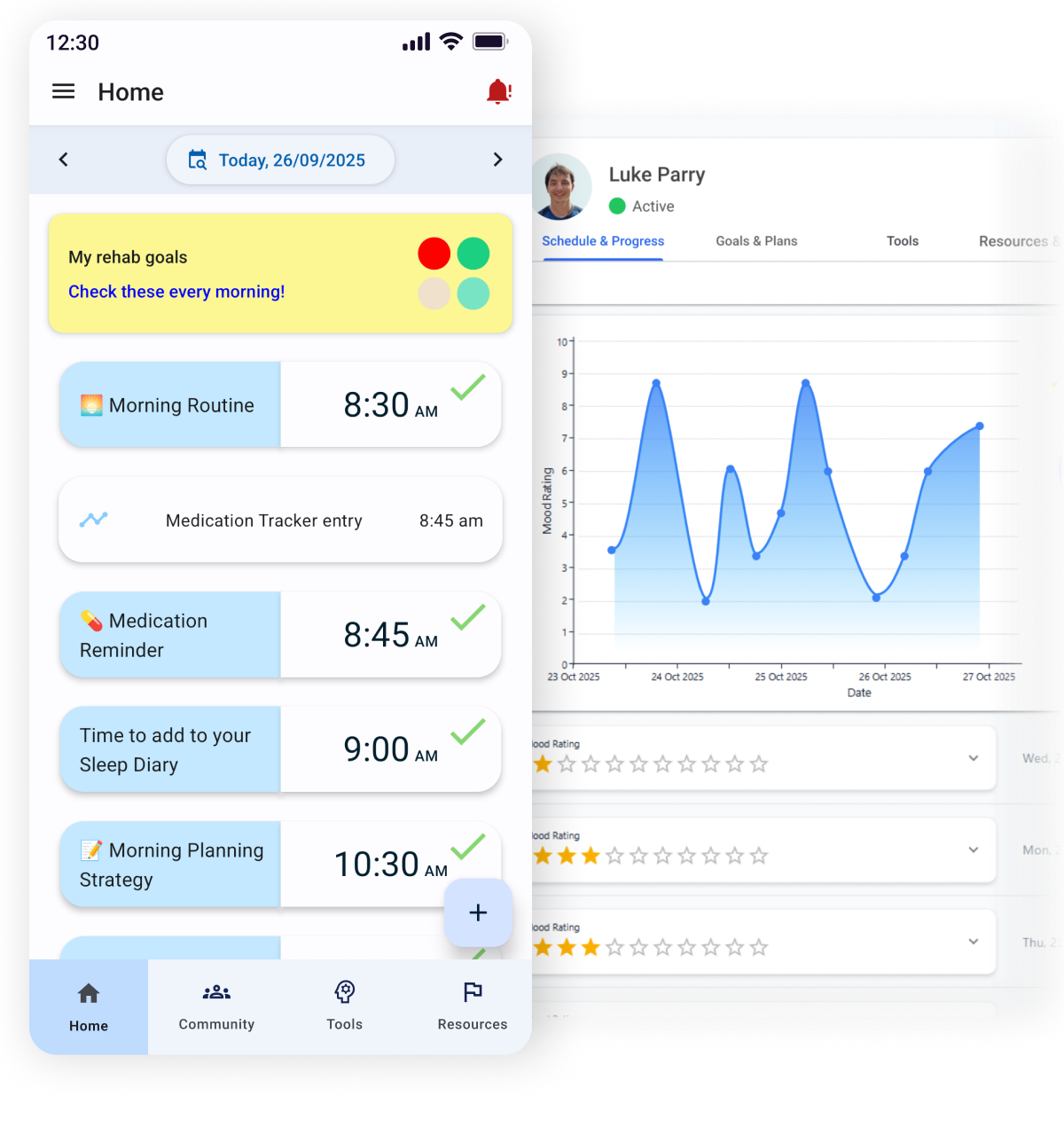

Remember what matters
Scheduled Reminders make meds, appointments and home exercises hard to miss.

See and feel progress
Trackers & Journals help you log mood, fatigue or practice time and spot patterns to celebrate wins.

Help when it’s hard to start
Daily Nudges arrive at helpful moments to spark action and build habits.

Everything in one place
Therapy handouts, links and videos live in Resources—no lost papers.

Community that understands
Opt‑in Community provides peer tips and encouragement when you need it.

Family included - when you need
Invite trusted people to your Care Circle so everyone sees the plan and can help with routines.

A Twin Road to Recovery
Our story starts at home: Luke’s brain injury exposed the gaps between sessions—remembering, starting, keeping momentum. Working with clinicians, survivors and caregivers, Luke and his identical twin Ellis turned those needs into practical, day-to-day tools. From the beginning, we've built neumind with and for the community, combining therapy with what helps in real life.
A long road begins
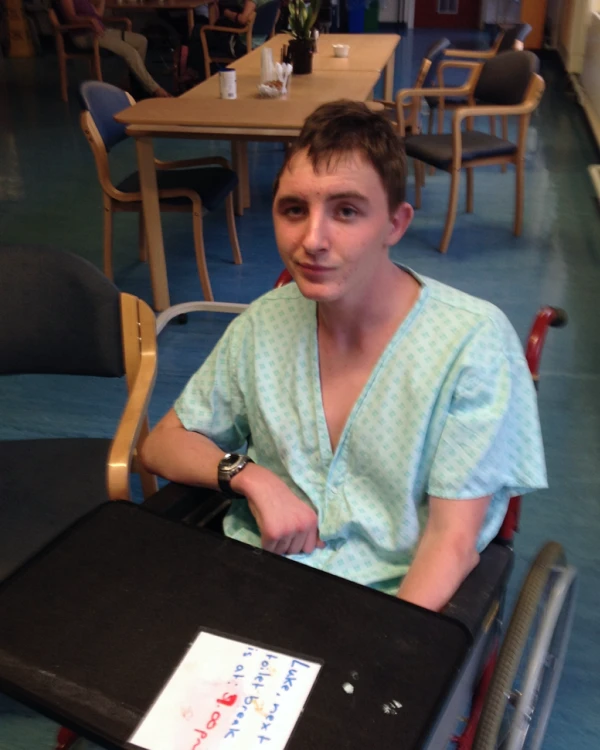
After a serious brain injury, Luke spent months in hospital and specialist rehab. The future was uncertain; progress came one small step at a time.
The care cliff
The real challenge started when discharged: limited contact, uncertainty, more to remember, and no easy way to carry therapy into daily life.
Strategies that Stick
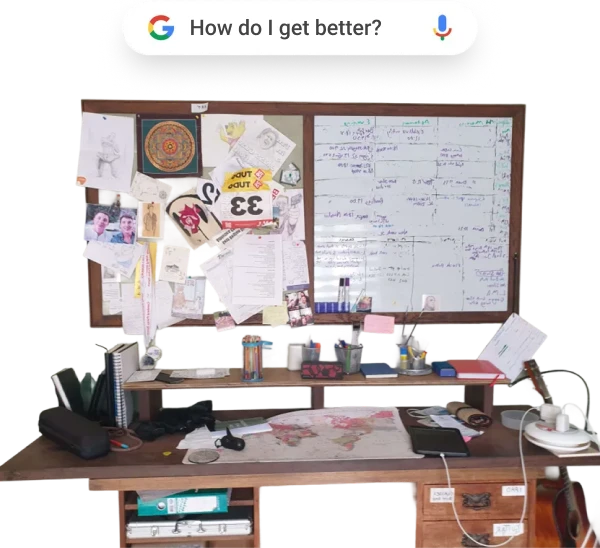
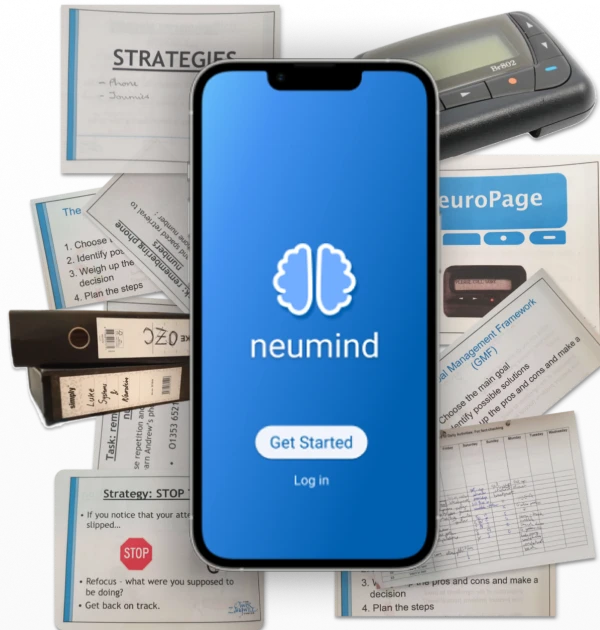
In specialist neurorehab, Luke learned practical strategies—written cues, step-by-step tasks, and a paging device—ways to remember and start things at home.
Surviving to Thriving
What began with Luke became a platform shaped by the ABI community: routines, reminders, trackers and a Care Circle to coordinate support.

Your Path to Recovery
neumind turns your plan into small, actionable steps with clear goals, bite-sized guidance and shared visibility - so practice keeps going between sessions.
Turn plans into daily steps and stay organised
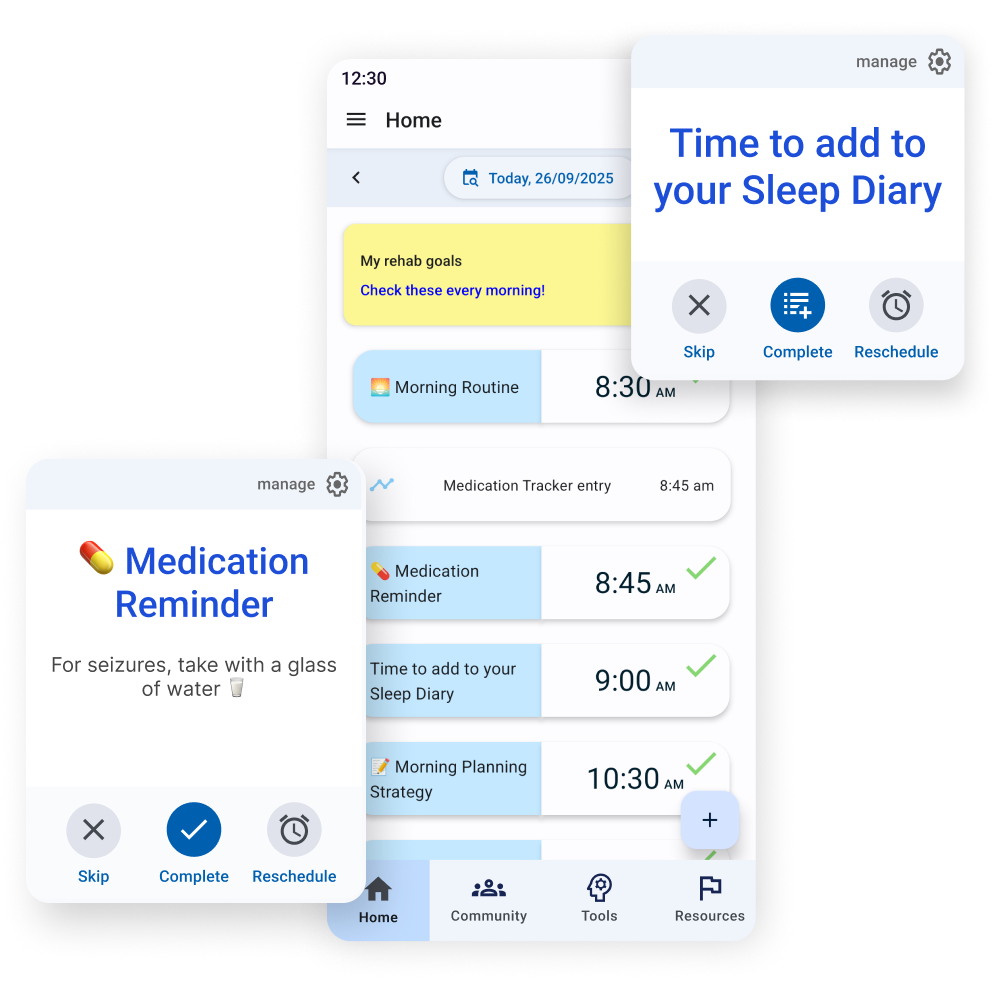
Schedule prompts for tasks and meds, and get an alert when it’s time. This takes the pressure off your brain so you can focus on the more interesting stuff. Create simple routines (e.g., “Morning memory warm-up” or “Balance exercises”) and build consistent habits.
See and feel progress
Log mood, fatigue, headaches or practice time with quick sliders (e.g. rate your fatigue or note your mood) and jot down daily notes. The app turns these into simple graphs over time so you and your therapist can spot patterns and changes.

Gentle nudges to remember and practise
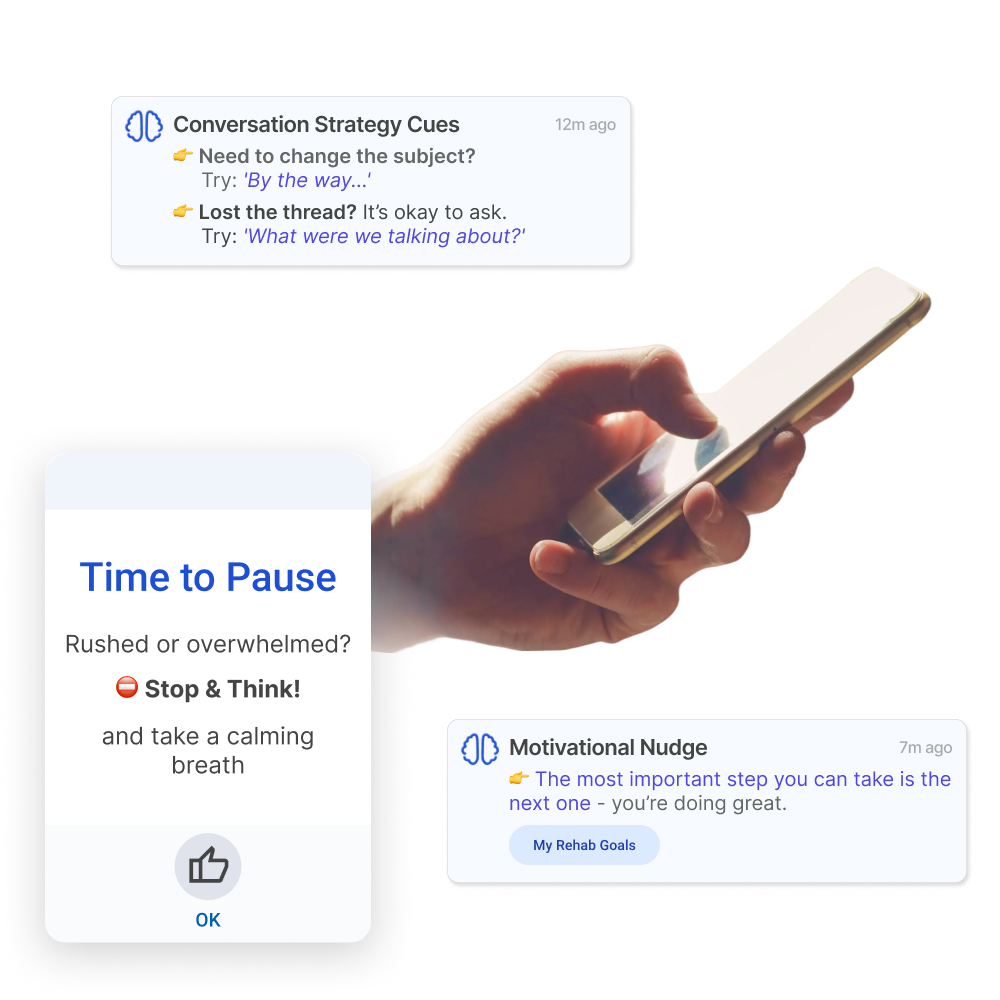
Can't remember your favourite joke or keep forgetting that strategy your therapist taught you? Not a problem. These smart nudges give you a little push to get started when motivation is low (Luke's record is 50 active nudges but I wouldn't recommend that many...).
Your journey, your story
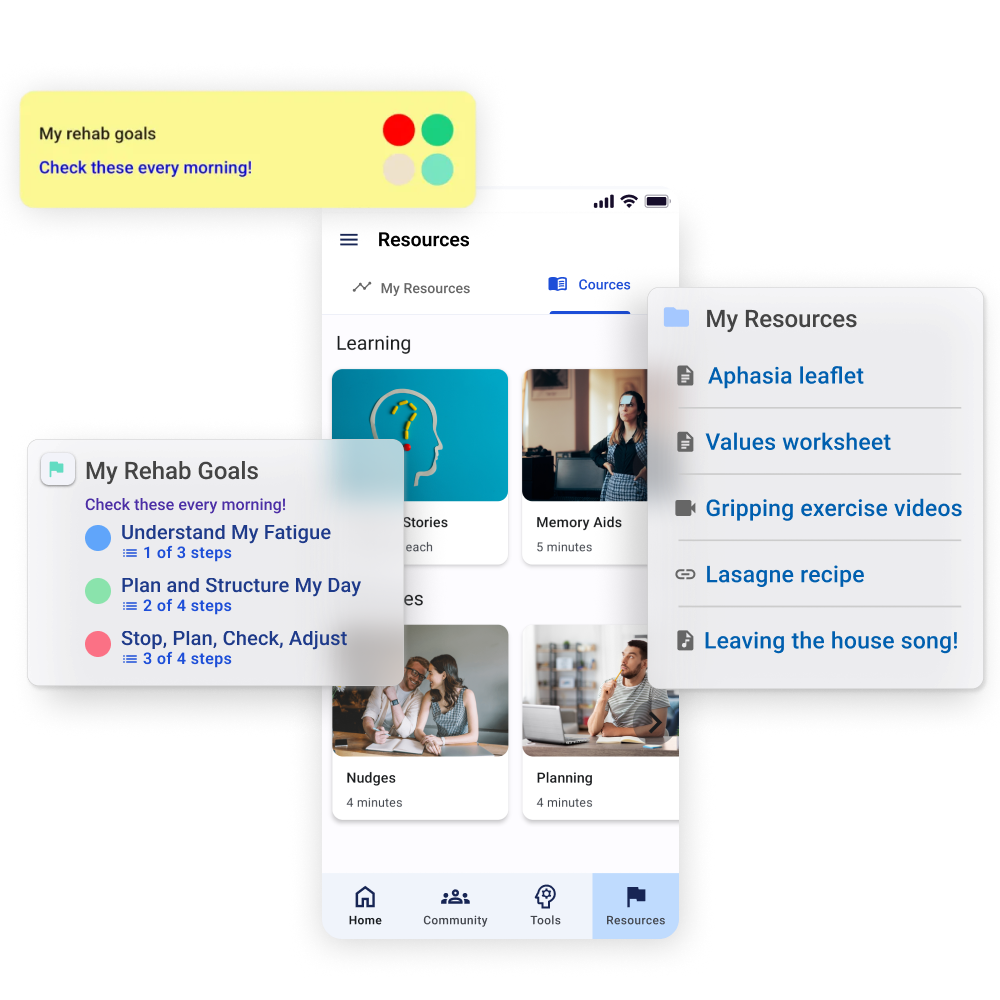
Work on goals set with your therapist and break them into simple tasks to make progress simple and keep up momentum. Keep all your therapy resources (like worksheets, tips or videos) in one place in the app so they travel with you whenever you need them - no more paper handouts or lost notes.
Invite your care circle
Invite trusted family members or clinicians into your care circle. They can (with your consent) view your tasks or entries and help you stay on track so everyone works together as a team.
A community that understands
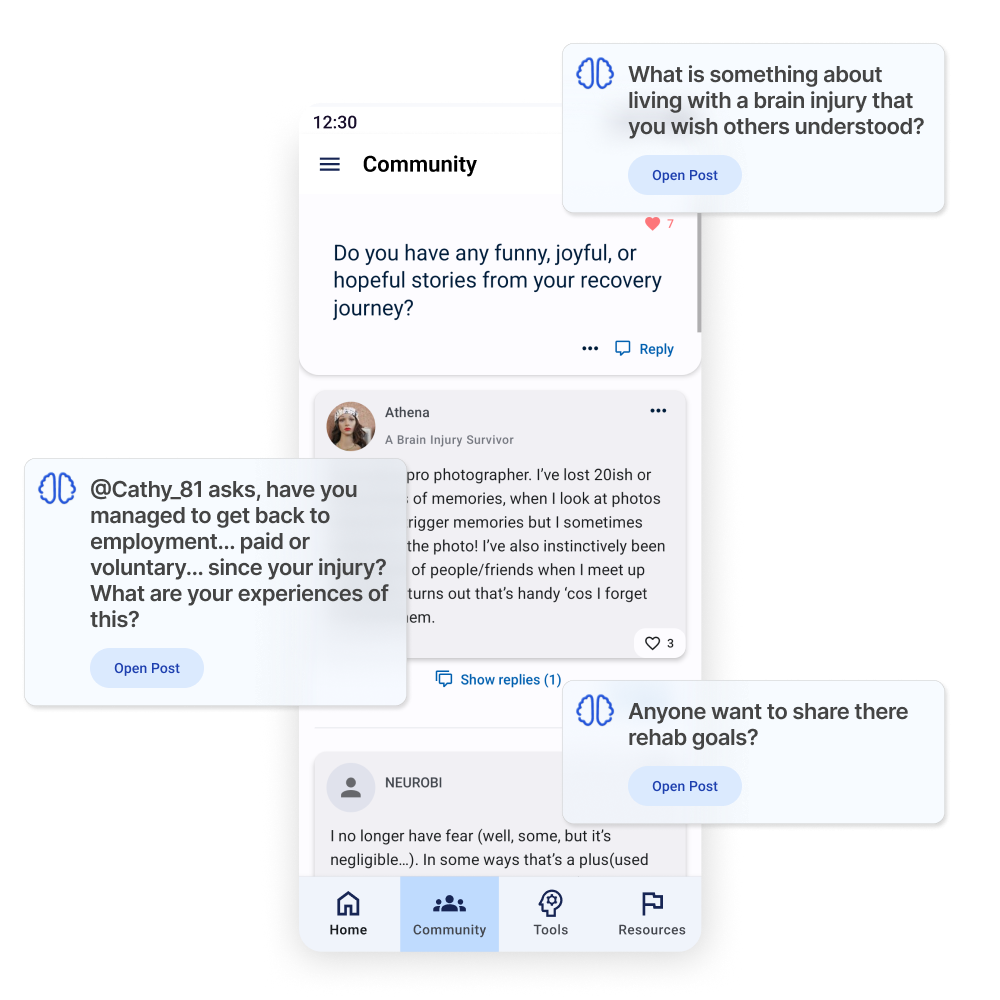
Join a supportive community of Neumind users to share stories, tips, and encouragement. Connect with others who have similar experiences, so you don’t feel alone on your journey.
Turning therapy into daily action
Prompts delivered
Journals / tracker entries
Education modules completed
Start your recovery journey today
Take the first step towards personalised support and improved independence
Answers to Common Questions
Yes. You can start with the app for self-management and family support. If you’re in active rehab, use Neumind alongside your clinician; it’s designed to support care, not replace it. You can link to a therapist later and share access with permission.
Yes. You can invite trusted family members into your Care Circle at no extra charge so they can see the plan and help day to day.
Yes, Neumind works on smartphones and tablets (e.g., iPad, Surface Pro).
Yes. Ask your therapist to invite you; they can even prepare your plan before sending the invite. Once connected, you can share reminders, trackers and journals as you go.
If you expect an invite, it’s better to wait—this avoids duplicate accounts. If you’ve already signed up, share the email you used so your therapist can connect you.
Your account stays with you. Therapy plans are portable, so you keep using Neumind independently and can continue any routines that help. You control access and can revoke or change who sees your information at any time.
Yes. You can set up the app, invite your loved one, and (with their permission) help manage reminders, routines and resources in their Care Circle.
Neumind is built to UK GDPR standards. Access is permission-based; you (or your loved one) decide who’s in the Care Circle and can revoke access anytime. Data-subject rights (access, erasure, portability) are supported.
No. Neumind is wellbeing software designed to support therapy and day-to-day self-management. It doesn’t provide medical advice and isn’t a substitute for clinical care.
Still have questions?
Get in touch - we're always happy to chat!